Spotify enters the lossless audio era with its Premium plan, promising a richer, more detailed listening experience. But up against Tidal, Qobuz or Apple Music, this move remains a measured step rather than a true revolution. After years of waiting and rumours, Spotify has finally made lossless audio official on its Premium plan.…
After years of waiting and rumours, Spotify has finally made lossless audio official on its Premium plan. You may already have seen the message on your screen this week: “Get ready for a whole new listening experience. Lossless is coming to Premium. We’ll let you know when it’s available.” A notification that marks a turning point in the history of the most widely used platform in the world.
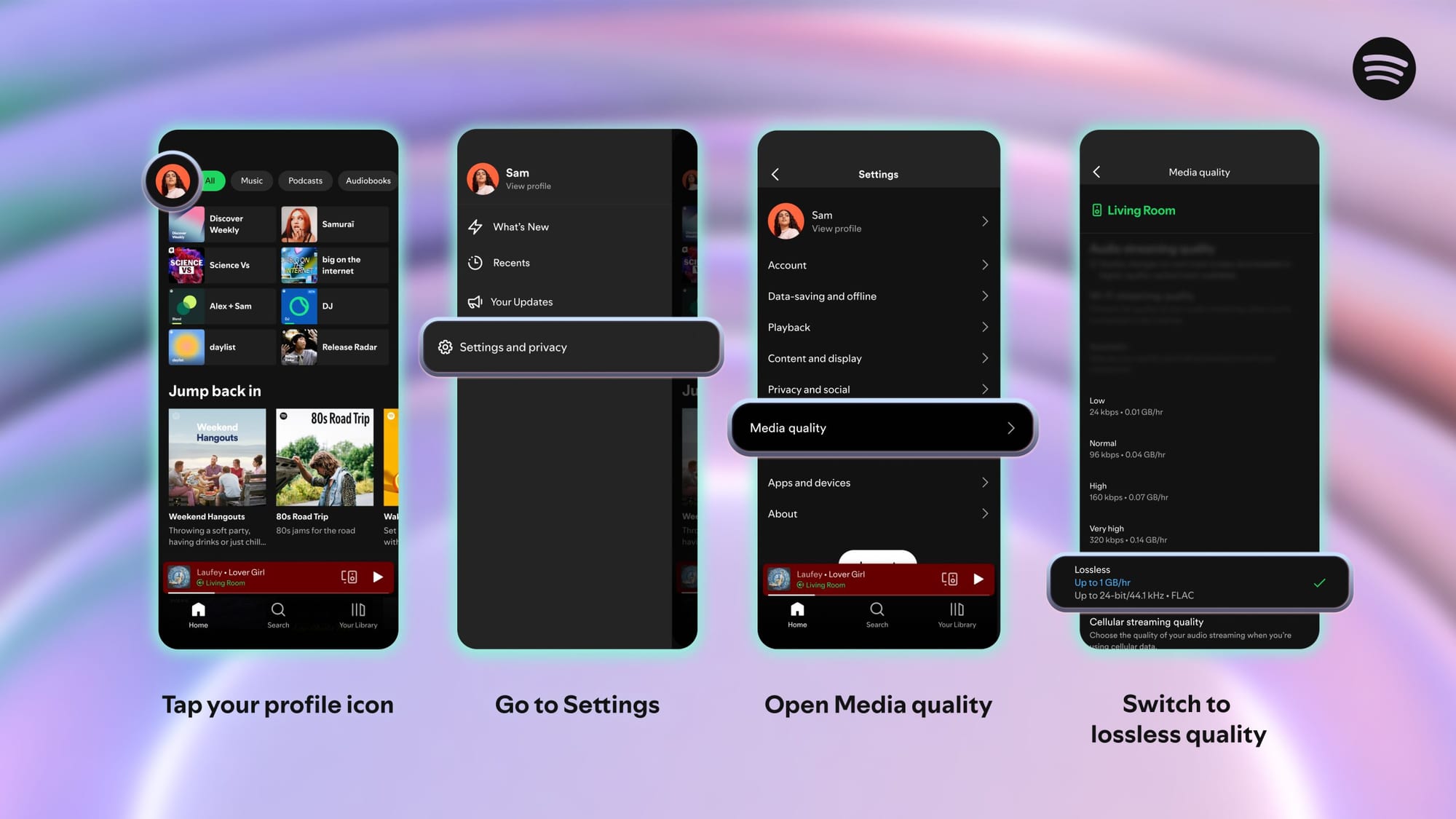
With this new feature, Spotify now offers FLAC streaming up to 24-bit / 44.1 kHz. In plain terms, lossless CD quality, far better than the compressed files offered until now. It is a major change that will transform the experience of millions of subscribers, long frustrated by the gap with competing services.
That said, not everything is perfect. Where Qobuz, Tidal and Apple Music already offer hi-res audio up to 96 kHz or even 192 kHz, Spotify is sticking to a more cautious approach. It is a deliberate strategy: prioritising simplicity, compatibility with as many devices as possible and reasonable data usage. Enough to win over the general public, but it will leave the most demanding audiophiles wanting more.
What does that actually mean? A lossless file at 44.1 kHz already delivers faithful, detailed playback, but 96 or 192 kHz formats offer a wider dynamic range and greater precision, especially noticeable on high-end hi-fi equipment. For untrained ears and on ordinary earphones, the difference will remain minimal. But for enthusiasts, micro-details, soundstage and depth can be better reproduced elsewhere.
This shift comes in a particular context: for several months, Spotify has been facing a wave of protests and departing users, tempted by the competition or critical of certain strategic decisions. The platform is therefore rolling out one change after another (DJ, AI-generated playlists, new social features, and now lossless) to stem a potential mass exodus and hold on to its place as leader.
Another point worth noting: the rollout is gradual. Only some Premium subscribers, in around fifty markets including the United States, Germany, Japan and soon France, can already switch the option on. Everyone else will have to wait a few more weeks.
All in all, Spotify is finally catching up on part of its delay and answering a request that has been voiced for years. Lossless is here, accessible and practical, but not yet on a par with the most audiophile offers on the market. An important first step… that calls for more.