

The recorded music market in France has just reached a symbolic milestone: for the first time in almost 20 years, its revenue topped one billion euros over 2024. But behind this impressive figure, the music industry is walking a tightrope, between slow growth, technological challenges and the search for a new…
Unsurprisingly, subscription streaming dominates the French music landscape. Accounting for 60% of the sector’s revenue, or 522 million euros, it grew by 11.4% in a year. But on closer inspection, this rise remains below the global average (+10.6%). Attracting new subscribers, particularly among the over-50s, is becoming a priority to close the gap.
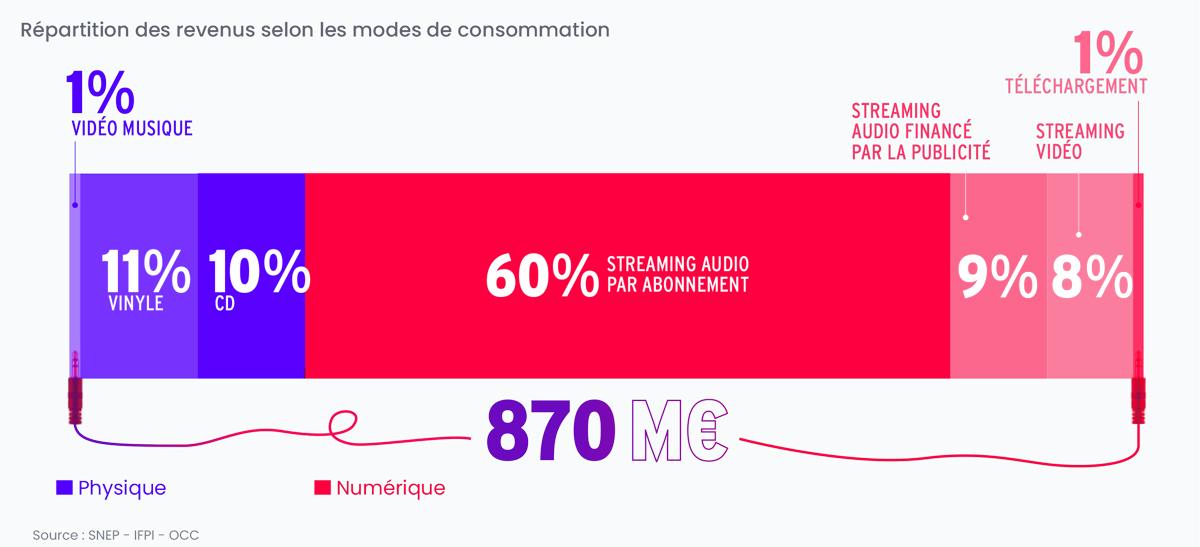
Despite the all-digital era, physical formats still hold a significant place, with 195.6 million euros in revenue. The CD, often declared dead, is still standing with 10 million units sold, while vinyl, a genuine niche phenomenon, captures 11% of the market. One striking fact: the rise of “artist stores”, where fans get direct access to exclusive editions, confirming a trend towards ultra-targeted consumption.
AI and remuneration: a crucial issue
Behind these figures, one thing worries industry professionals: artificial intelligence. While it opens up prospects in terms of creation and automation, it also threatens how revenue is shared. Snep insists on the need for à la carte licensing agreements rather than a global licence model, to better protect artists and rights holders.
Despite these obstacles, one figure illustrates the growing enthusiasm for music: French people listen to an average of 42 more minutes of music per week than last year, with heavy consumption among 15 to 24-year-olds. Yet this record consumption isn’t enough to significantly speed up the market’s growth.
The French music industry has shown its resilience, but the challenge is clear: turning listeners’ enthusiasm into real, lasting economic growth. Between adapting to new listening habits and fighting for fairer redistribution, the debate is more open than ever.