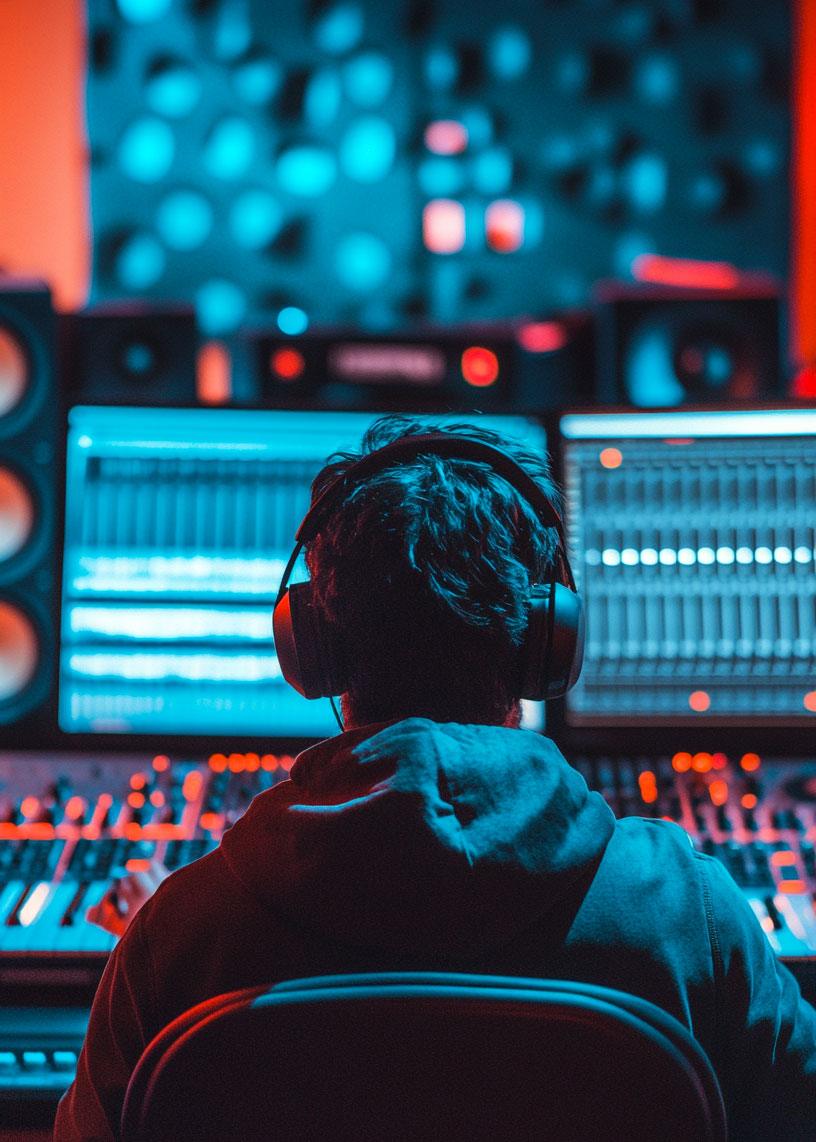
In the music industry, where fame and a relentless release schedule very often shape an artist’s career, a discreet but unavoidable practice has taken hold over the years: ghost production. Away from the spotlight, “ghost” producers create for others, often DJs, who reap all the glory.…
What is ghost production?
Ghost production means composing, arranging and producing a track in the name of an artist or DJ, while staying out of sight. The ghost producer is paid for the work, but their name vanishes behind the scenes: neither credited nor visible on music platforms. In return, the artist takes ownership of the creation, sometimes even releasing it under their own name.
In genres like EDM or techno, where a steady buzz of new releases is essential to stay in the race, ghost production has become common practice. Tied up with tours or other commitments, DJs often lack the time to focus on creating new tracks. That’s where the ghost producer comes in, becoming an indispensable asset for keeping their musical presence alive.
It’s also worth pointing out that a DJ isn’t always a producer, and vice versa. The ghost producer then brings their music production know-how to give fresh momentum to the artistic project of a DJ whose expertise lies first and foremost in live performance. That way, everyone finds their place: the DJ shines on stage, while the producer quietly shapes the sonic world.
More than just a service: a creative collaboration
Contrary to popular belief, the ghost producer isn’t just someone carrying out orders. They often become the artist’s right-hand person, working hand in hand with them to grasp their vision, musical world and expectations. This close dialogue lets the producer shape a work that fits the artist’s sonic identity perfectly, while bringing in their own technical and creative expertise.
Single Spark, a French ghost producer at MP360, explains: “When I work with a DJ on their project, my goal is to help them find their sonic signature, the one that will set them apart from the rest. Generally, we draw inspiration from several reference tracks and identify together the elements they like: percussion, synths, effects, and so on.”
Whatever the size of the contribution, every touch counts in building a track, and it’s the fusion of these talents that shapes its potential success. “Sometimes a simple melodic suggestion or a punchy onomatopoeia, like the famous ‘Pouloulou’ (a nod to Niska’s track Réseaux), can be enough to lift a track and make it stick in people’s minds,” Single Spark tells us. Proof that even the most modest contributions can turn out to be decisive in a track’s success.

The business model
In the world of ghost production, payment models vary. While the ghost producer is traditionally paid a flat fee (a fixed sum for the work), more experienced or well-known producers often manage to negotiate better terms. On top of this upfront payment, it’s not unusual for them to ask for a share of the author or composer rights, especially when their artistic contribution proves decisive.
This model lets them benefit from the royalties the music generates, whether through streaming, sales or club plays, while keeping their discreet role. This strategy proves particularly shrewd when a track has strong commercial potential, or is set to be played heavily by a big-name DJ at festivals or on tour.
Why does this practice stay in the shadows?
If ghost production is so widespread, why does it remain so secret? The answer lies in prestige and the quest for authenticity. For fans, an artist’s worth rests largely on their ability to create their own music. Admitting that a track was produced by someone else could damage that image, especially in the case of DJs, who are often seen as creators in their own right.
However, some big-name artists, such as David Guetta, DJ Snake and many others, have no qualms about publicly crediting their collaborators. In that case, we talk about co-production: a transparent collaboration where producers and artists share ideas, recognition and royalties. This approach preserves creative integrity while valuing teamwork, without ever compromising the authenticity perceived by the public.
The pros and cons for the ghost producer
For the ghost producer, this practice offers considerable advantages. Working with big-name artists brings substantial pay, while avoiding the public demands of a career in the spotlight. What’s more, the chance to negotiate author and composer rights offers recurring income, especially if the track becomes a hit.
Nevertheless, the lack of public recognition can also be a drawback. By staying in the shadows, the producer struggles to build their own name in the industry, which can hold back opportunities for more visible, recognised collaborations.
Single Spark says: “Ghost producers get known through word of mouth, because the moral bond between us and our clients doesn’t allow us to talk publicly about our work.”
A controversial practice
Ghost production raises ethical questions within the music industry. For some purists, it threatens artistic integrity, where creative authenticity is paramount. Others, on the other hand, see it as a legitimate professional collaboration, much like what happens in industries such as film or fashion.
Single Spark explains: “The most important thing when you get into ghost production is that both parties clearly define the scope of their collaboration. Even if I work in a creative, entertainment-driven field, it’s essential to set a precise framework from the start, to avoid any frustration, both for the artist and for me.”
In reality, ghost production turns out to be a pragmatic solution, allowing artists and DJs to stay in the spotlight while relying on the expertise of talented producers. Discreet as it may be, this practice is now a key part of how contemporary music works.
Conclusion
Ghost production is both an opportunity and a dilemma for the music industry. By letting tracks see the light of day without their true creator taking centre stage, it reveals how complex the production process is. In a world where the public image of a DJ or artist can sometimes take precedence over the sound, the producers in the shadows keep making the stars shine, while securing a share of the profits.
Don’t miss Single Spark’s masterclass with MP360, from 11 to 12 November 2024. To mark the occasion, enjoy 15% off all MP360 mixing and mastering services. Personalised discounts are also available for ghost production services. To take advantage, simply fill in this form.
Chargement…</iframe>